Archives
- 2026-08
- 2026-07
- 2026-06
- 2026-05
- 2026-04
- 2026-03
- 2026-02
- 2026-01
- 2025-12
- 2025-11
- 2025-10
- 2025-09
- 2025-03
- 2025-02
- 2025-01
- 2024-12
- 2024-11
- 2024-10
- 2024-09
- 2024-08
- 2024-07
- 2024-06
- 2024-05
- 2024-04
- 2024-03
- 2024-02
- 2024-01
- 2023-12
- 2023-11
- 2023-10
- 2023-09
- 2023-08
- 2023-07
- 2023-06
- 2023-05
- 2023-04
- 2023-03
- 2023-02
- 2023-01
- 2022-12
- 2022-11
- 2022-10
- 2022-09
- 2022-08
- 2022-07
- 2022-06
- 2022-05
- 2022-04
- 2022-03
- 2022-02
- 2022-01
- 2021-12
- 2021-11
- 2021-10
- 2021-09
- 2021-08
- 2021-07
- 2021-06
- 2021-05
- 2021-04
- 2021-03
- 2021-02
- 2021-01
- 2020-12
- 2020-11
- 2020-10
- 2020-09
- 2020-08
- 2020-07
- 2020-06
- 2020-05
- 2020-04
- 2020-03
- 2020-02
- 2020-01
- 2019-12
- 2019-11
- 2019-10
- 2019-09
- 2019-08
- 2019-07
- 2018-07
-
JP 1302 dihydrochloride synthesis br Materials and methods b
2024-08-02
Materials and methods Results and discussion First, we examined whether hypothalamic Akt-mediated signaling pathways are regulated postprandially in chickens. Refeeding significantly (P JP 1302 dihydrochloride synthesis concentrations significantly increased in chicks after 1 h of refeeding (
-
ACET Within the PARP family TIPARP is most evolutionarily
2024-08-02
Within the PARP family, TIPARP is most evolutionarily conserved with PARP12 (ARTD12) and PARP13 (ARTD13) [27,28,41]. All three proteins contain at least one RNA-type CCCH zinc finger domain, a poly-ADP-ribose binding WWE domain and a PARP catalytic domain (Fig. 1). PARP13 is catalytically inactive,
-
As regards feeding the ability to dissipate surplus energy
2024-08-02
As regards feeding, the ability to dissipate surplus energy in the form of heat is beneficial for animals if the protein concentration in the food is low, since it allows them then to meet the adequate protein intake requirement without getting fat. Some of the major dietary activators of the AHR ar
-
Numerous studies have shown that PUFA incorporation into the
2024-08-02
Numerous studies have shown that ω-3 PUFA incorporation into the lipid raft can affect the distribution and function of protein in the lipid raft by altering raft composition [25], [26], [27]. For example, DHA treatment excluded phospholipase D (PLD) from lipid raft toward non-lipid raft, resulting
-
YM 58483 Tension within the network could
2024-08-02
Tension within the network could be explained by two potential mechanisms: the more classical contractility that is dependent on motor proteins that are pulling YM 58483 filaments towards each other [10]; or contractility that is caused by disassembly of a crosslinked network of actin filaments [2]
-
T7 High Yield Fluorescein RNA In the olfactory bulb expressi
2024-08-02
In the olfactory bulb, expression was especially prominent in the mitral cell layer from embryonic stages to adult tissues (Figs. 1D–G). By E14–E16, Ack1 signal was remarkably intense in the proliferative ventricular zone (Fig. 1D). From E18 to adult, expression was also observed in glomerular and g
-
A similar circuit between pyramidal neurons and SST interneu
2024-08-02
A similar circuit between pyramidal neurons and SST interneurons is also prevalent in layers 2/3 of the cortex. The synapses onto SST interneurons, however, are functionally weak, raising questions about their computational power. In the first set of experiments, Urban-Ciecko et al. (2018) show that
-
br Results and discussion br Conclusion
2024-08-02
Results and discussion Conclusion In summary, a series of indazole-based derivatives were synthesized and SAR studies conducted, with view to the development of a novel Aurora kinases inhibitor. The carboxylic IC261 receptor group extending from the C-3 position of the aniline and substituted
-
The link between HPV infection
2024-08-02
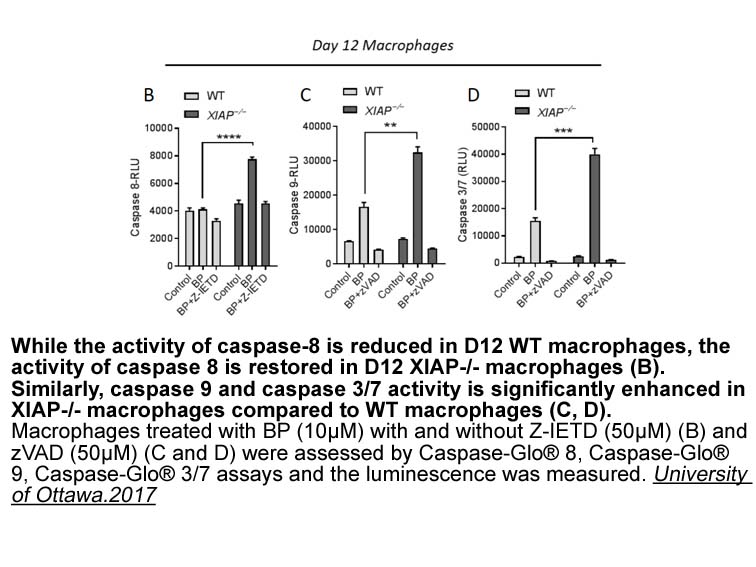
The link between HPV infection and neoplasia has been well established. HPV encodes two oncogenes (E6 and E7) that drive Atorvastatin Calcium progression by controlling the functions of tumor suppressor proteins p53 and Rb [7]. HPV is associated with more than 99% of cervical CESC cases [8]. CESC r
-
Our data indicate that the D domain only
2024-08-02
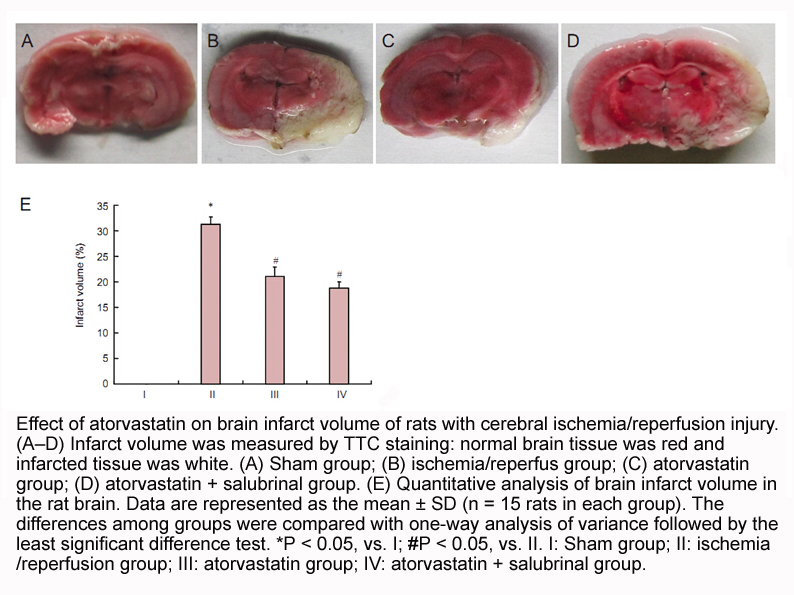
Our data indicate that the D1 domain only needs to hydrolyze ATP a few times, or perhaps even just once, during the processing of a given substrate molecule, whereas the D2 domain hydrolyzes ATP many times. Consistent with this model, only D2 contains the canonical aromatic pore loop residues implic
-
Introduction An association of elevated branched chain amino
2024-08-02
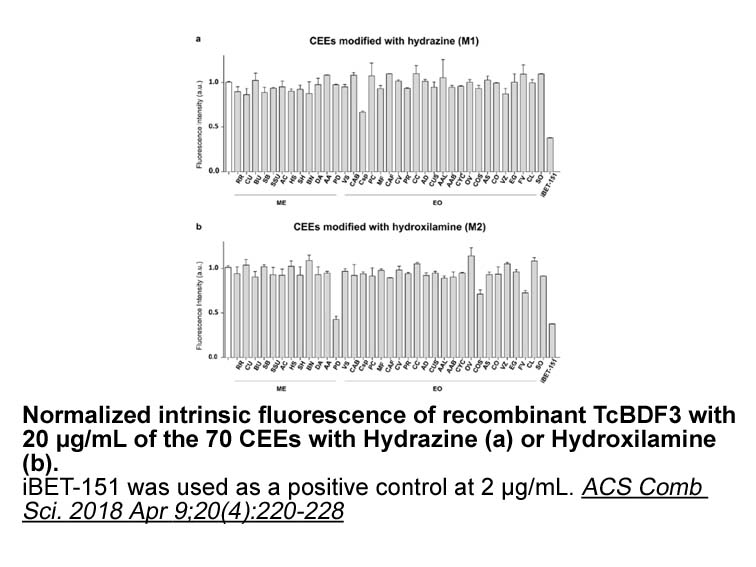
Introduction An association of elevated branched-chain Benzoylmesaconitine (BCAA—Leu, Val, Ile) with obesity and insulin resistance was first reported nearly 50 years ago (Felig et al., 1969). With the advent of metabolomics technologies, it has since become apparent that the association of BCAA a
-
Although TP status has been shown to play a role
2024-08-02
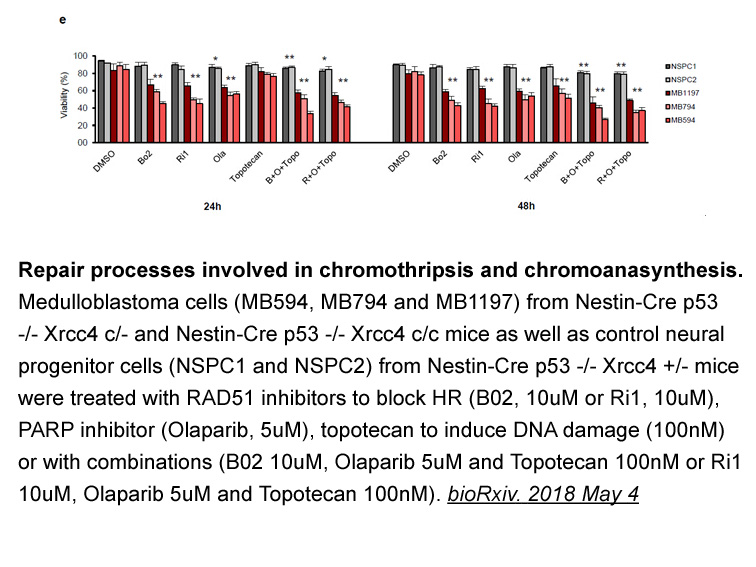
Although TP53 status has been shown to play a role in ATR inhibition and platinum resistance [7], [27], [38], in inhibition of ATM and sensitivity to IR [39], and in the activation of Chk1 and Chk2 [3], [4], ATM and ATR signaling can occur through the p38MAPK/MK2 pathway in p53-deficient Hypotaurine
-
We demonstrated clearly that the overexpression of
2024-08-01
We demonstrated clearly that the overexpression of sFlt-1 significantly increased arginase perhexiline and enhanced arginase activity in HUVECs (Fig. 3). NO formation is related inversely to serum levels of sFlt-1 in preeclampsia [11]. The disorder of NO formation, which was involved in hypertension
-
Citral or dimethyl octadien al is a mixture of two
2024-08-01
Citral or 3,7-dimethyl-2,6-octadien-1-al is a mixture of two stereoisomeric monoterpene aldehydes (the trans isomer geranial, citral A (40–62%)) and the cis isomer neral, citral B (25–38%) and serves one of the main constituent of essential oils of C. citratusis used in cosmetic, food, fungicides, p
-
br Apelin The APJ receptor ligand apelin
2024-08-01
Apelin The APJ receptor ligand apelin firstly in 1998 was segregated from bovine stomach tissue. Human preproapelin gene located on chromosome Xq25–26.1. The apelin preproproteins consist of 77 amino HQNO residues that are cleaved into biologically active C-terminal fragments of various sizes. T
15520 records 134/1035 page Previous Next First page 上5页 131132133134135 下5页 Last page